

Women Who Documented the World
- May 16
- 2 min read
Photograph by: Lotte JacobiPortrait: Albert EinsteinDate: 1938
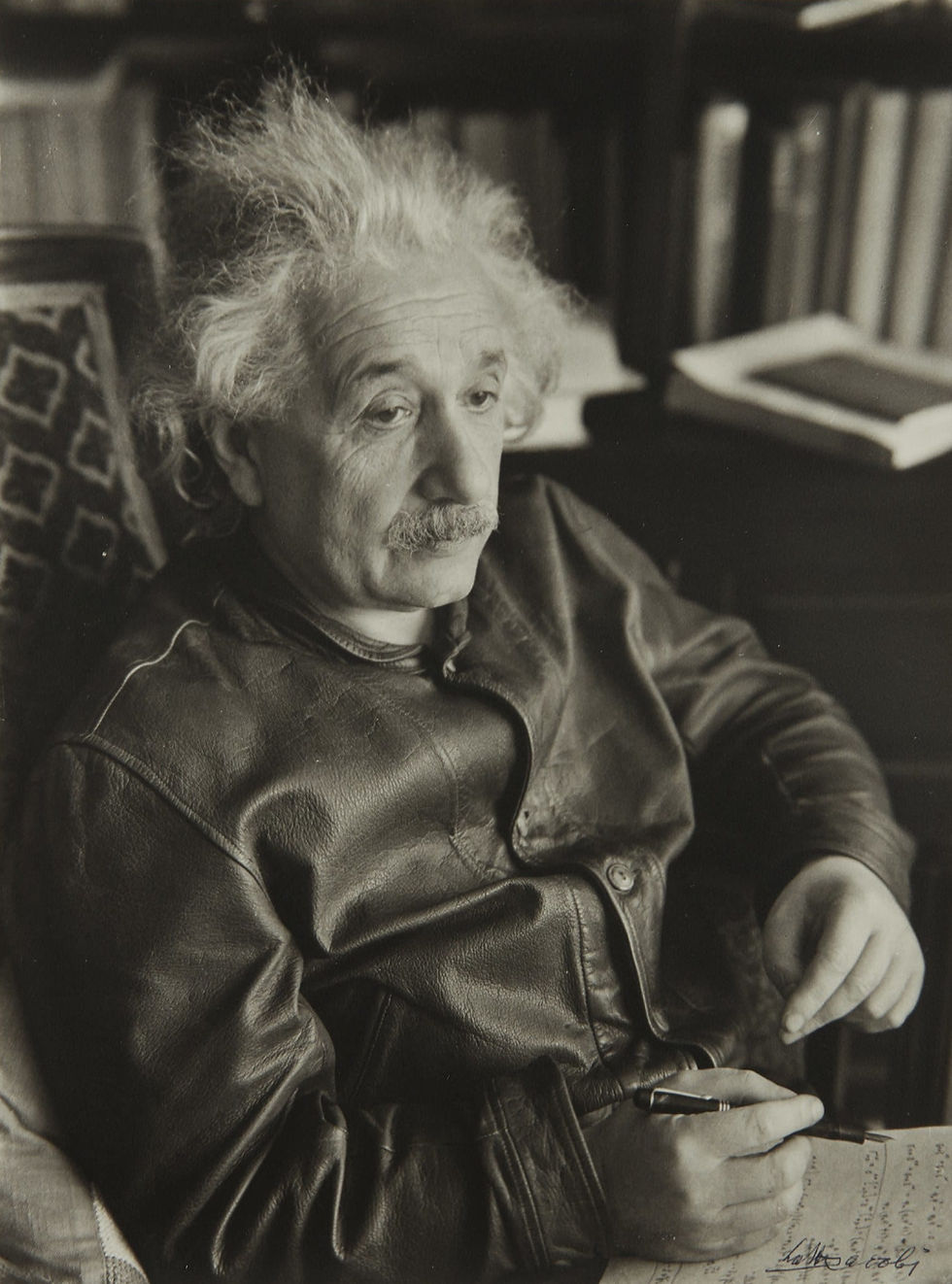
Photography shapes historical memory more than we often realize. For many people, Albert Einstein does not first exist as a theory, a formula, or even a scientific figure. He exists as an image. Wild hair. Deep eyes. A face suspended somewhere between genius and absent-minded warmth.
Lotte Jacobi helped create that visual memory.
Born in Germany into a family of photographers, Jacobi became known for her portraits of artists, intellectuals, and political figures during one of the most turbulent periods of the twentieth century. Her work carried a quiet humanism. Rather than constructing grand heroic portraits, she often photographed people with unusual softness and directness, allowing personality to emerge naturally through expression and posture.
Her photographs of Einstein became some of the most recognizable portraits ever made of him. But what makes them important is not simply recognition. It is the way they transformed a nearly mythological scientific figure back into a human being.
Looking at Jacobi’s photographs today, Einstein does not feel unreachable. He feels thoughtful, tired, curious, distracted, kind. The photographs preserve not only appearance, but atmosphere.
This is one of the greatest strengths of photography: it enables future generations to emotionally connect with individuals they could never meet in person. Without photography, many historical figures would merely be abstract names in texts. Photos provide them with a physical presence, allowing us to examine their expressions, body language, gestures, and even moments of vulnerability.
Lotte Jacobi understood this deeply. Her portraits rarely feel invasive. Instead, they feel patient, observant, and human.
Today, when we think of Einstein, many of us unconsciously think through photographs like hers. That alone says something extraordinary about the role photography plays in shaping collective memory.


Comments