

Women Who Documented the World:
- Feb 7
- 2 min read
Olga Ignatovich, 1942, USSR

In 1942, the war wasn’t just a distant threat anymore. It had crept into our cities, homes, and everyday lives. The Kalinin Front wasn’t just a line on a map; it was a real place where newspapers were set in chilly rooms, where type was carefully arranged by hand, and where information became a source of strength.
In the photo of the Army newspaper typesetters, the war is there, but it’s not in the usual way. There are no explosions or visible battlefields. Instead, we see women working, focused and composed, immersed in the world of communication.
That’s what makes the image so powerful.
We often think of war as being about fighting. But it’s also built through printing presses, ink, paper, and how information is shared. The front relied not only on soldiers but on stories—on what was written, shared, and believed.
In 1942, Soviet women were everywhere in the war effort. Over 800,000 served in the Red Army, and many more worked in industries, medicine, communications, and anti-aircraft defense. The country’s cultural landscape changed quickly. Roles that seemed fixed disappeared because they were no longer needed.
In Ignatovich’s 1942 photos, we see this change happening quietly. Women in uniforms, women behind type cases, women in military offices. Their presence doesn’t feel like a symbol; it feels like they’re doing their jobs.
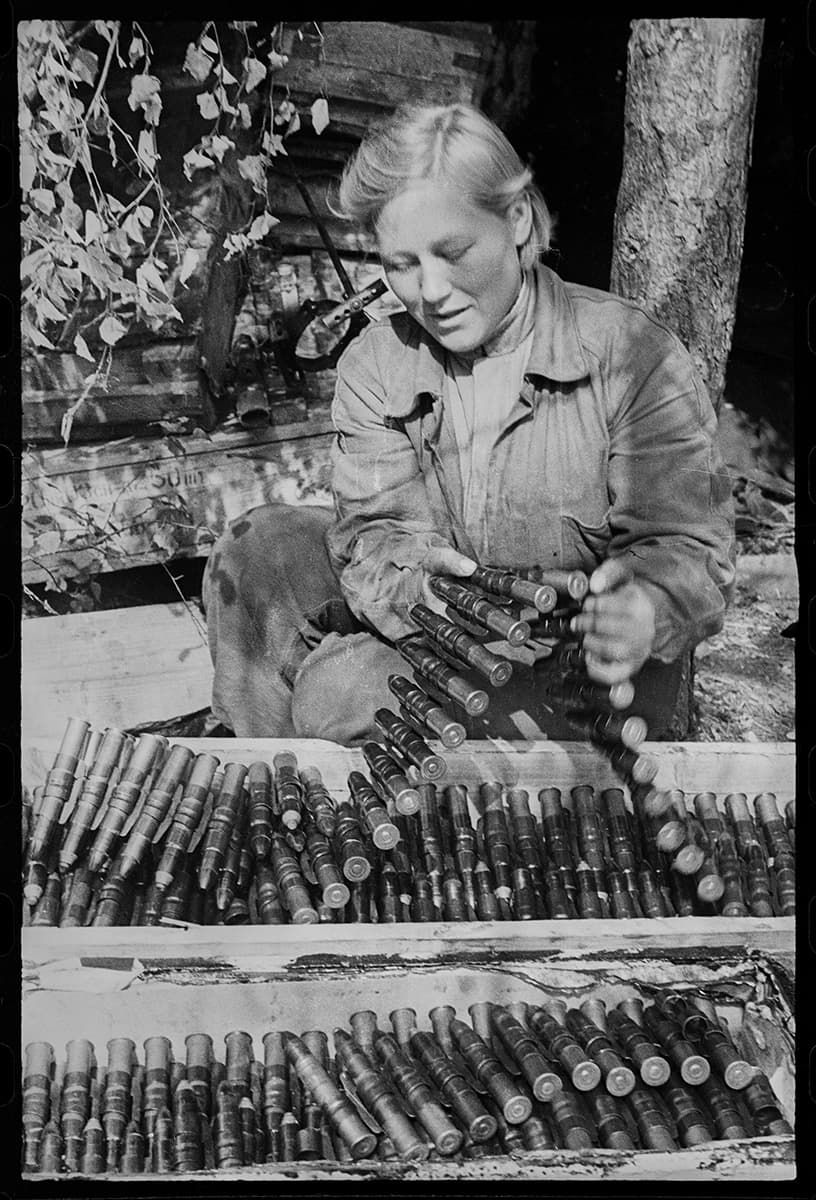
They’re not just showing up as exceptions. They’re working.
Olga Ignatovich herself was traveling with army units as a photo correspondent, working with military newspapers. Her job wasn’t just to capture acts of bravery but to document how wartime life worked—the systems that kept morale and order going.
The photo of the typesetters shows a different side of war culture: information as a way to survive. The printed word brought updates from the front, political messages, names, victories, and losses. It connected soldiers to a bigger story of purpose.
In this way, the image is about work and being seen. These women are part of the war’s foundation. Their contribution is intellectual and mechanical, not combative, but just as important.
War changed what a woman could be.
And in 1942, on the Kalinin Front, that change could be found not just in the trenches, but in the quiet way metal type was aligned.


Comments